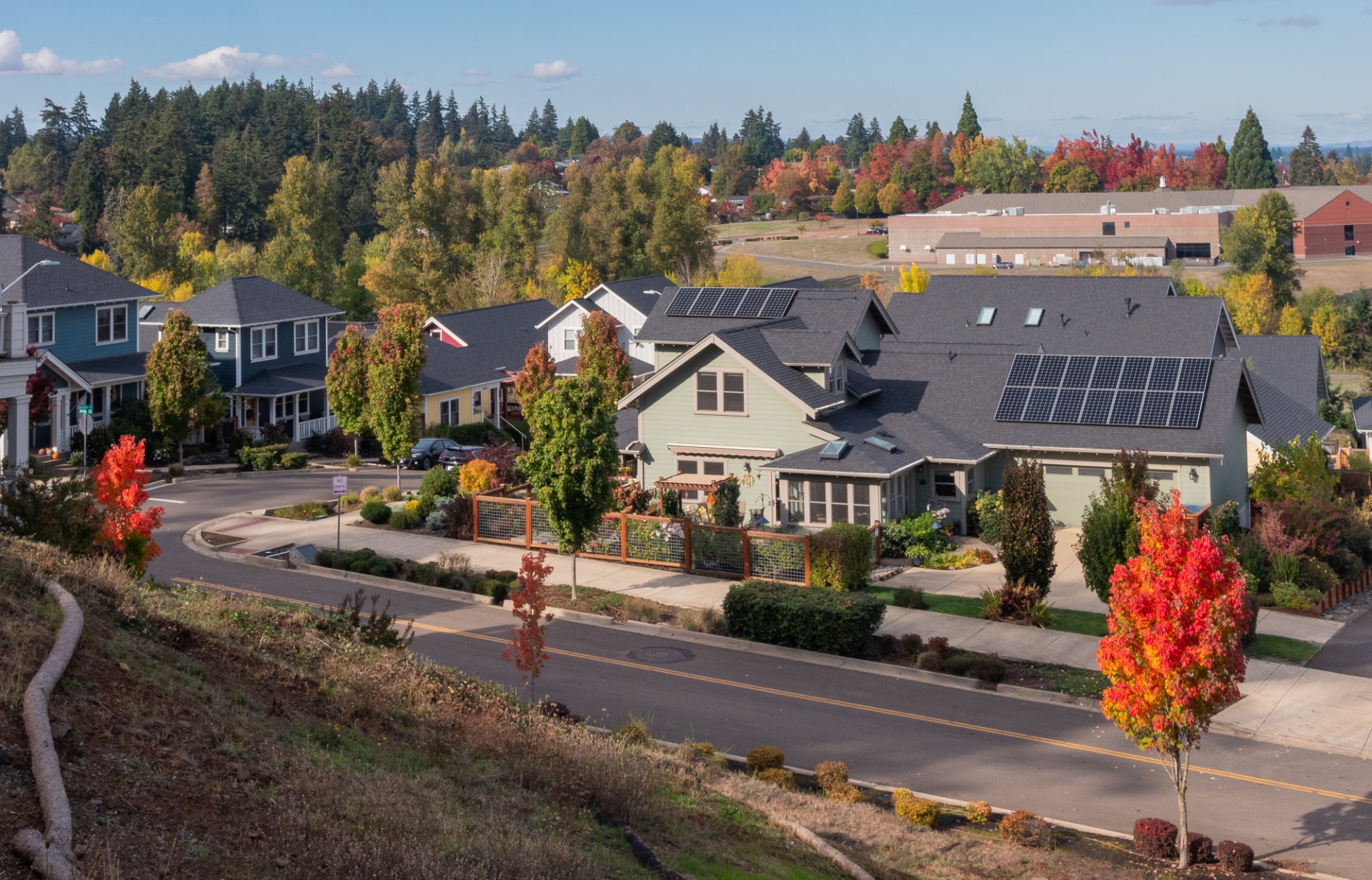
How Olsen Builds Great Homes & Great Communities
Anyone who has built with us knows we care deeply about the homes themselves. We obsess over layout, light, materials, and the way a house functions both now and years from now. But we also know a great house, by itself, isn’t enough.
What shapes daily life is everything in it and around it.
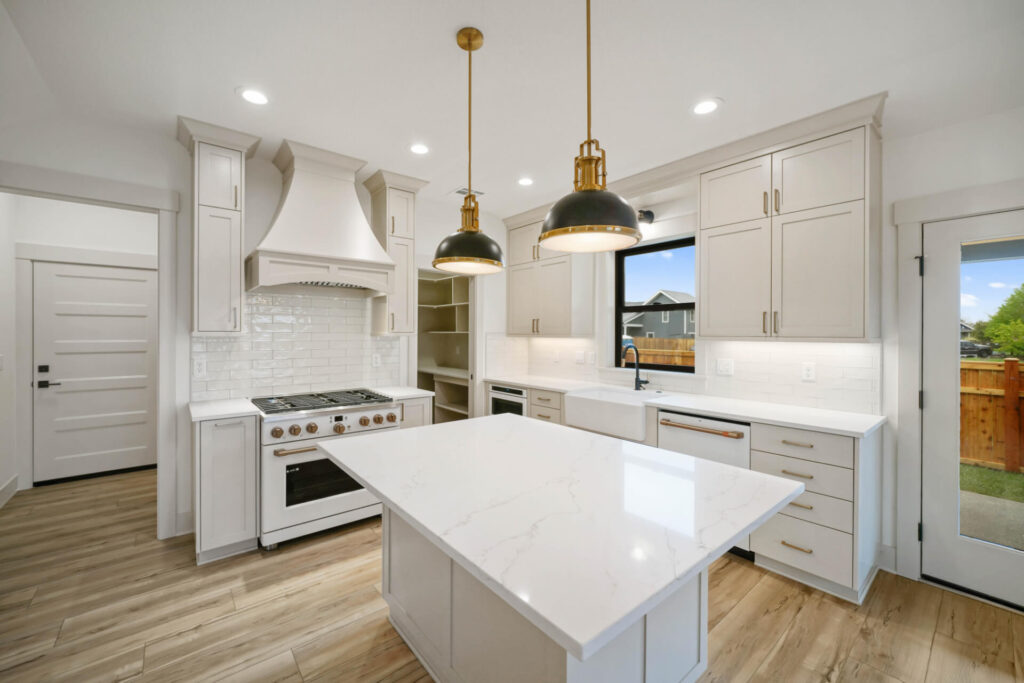
Each day, we’re working at both ends of the spectrum—from the 50,000-foot questions down to the smallest finish detail. And how does a fireplace mantel meet a piece of specialty tile in a way that feels just right? Or where do the neighborhood kids naturally gather to kick a ball?
We’re constantly moving between the micro and macro, because both matter.
The Questions We’re Always Asking
We ask the bigger questions—questions that don’t always show up on a set of drawings, but are felt every day once you move in:
- • How does this place invite people to walk?
Not just sidewalks, but a rhythm of streets, paths, and destinations that make walking feel natural. - • Where does the sunlight land throughout the day?
On the porch in the morning. Across the living room in the afternoon. In the places you’ll actually spend time. - • Where do kids naturally gather and play?
Not just backyards, but shared spaces where spontaneous connection happens—where bikes get dropped and friendships take shape. - • Where does the community come together?
A small green, an amphitheater, a corner space that becomes more than it was intended to be. - • What does the street feel like as a whole?
Not just one beautiful home, but a streetscape where each house contributes to something larger—where proportion, materials, and placement create a sense of belonging.
Both Matter
A few lines of a poem can create a beautiful image—but they’re only part of something larger.
And that’s how we think about our homes.
A tile shower may be that well-crafted rhyming couplet, but the sonnet extends beyond the property lines: maybe a walk to a neighbor’s front porch, a way the street looks in the evening light, or those places the neighborhood kids huddle after school.
Those—while not poured in concrete—are a true foundation of building great communities—great neighborhoods.